
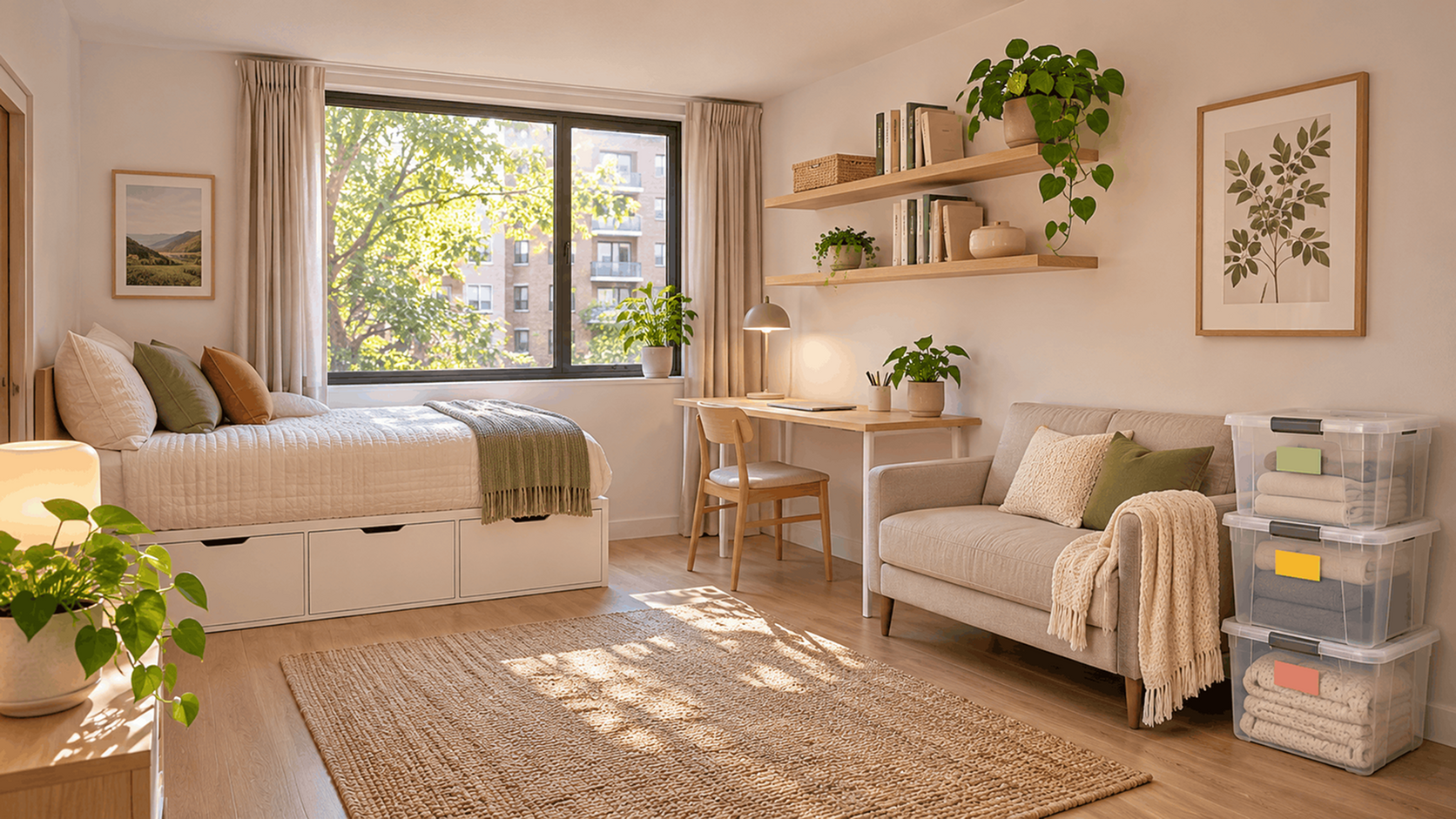
Quick Answer: Downsizing to a micro studio works best when every item goes into one of four piles: keep, sell, store, or donate. Downsizing to a micro studio usually means fitting your life into 300 to 400 square feet, so keep what you use weekly, sell bulky furniture and duplicates, and store only seasonal gear or keepsakes.
Downsizing to a micro studio is less about losing things and more about deciding what earns floor space. A compact unit gives you a fraction of the room a one-bedroom does. Every chair, box and kitchen gadget has to justify itself. If you're planning a move to a studio in Northwest Houston, Vivo Living Willowbrook is a helpful place to picture how a smaller layout fits your day.
What Is Downsizing to a Micro Studio?
Downsizing to a micro studio means moving from a larger home into a self-contained studio, usually under 400 square feet, with its own kitchen and bathroom. The Urban Land Institute's working definition places micro units below 350 square feet. You're trading space for lower upkeep and, often, a better location at a lower rent.
For scale, HireAHelper's 2026 analysis of U.S. rentals puts the average studio at about 440 square feet and the average one-bedroom at 804. Going micro can cut your living area in half. That's why measuring comes before packing.
Space Saving Ideas Start With Your Floor Plan
Get the dimensions of your new unit before you sort a single drawer. Most communities publish them, so pull up the available studio floor plans and sketch where the bed, desk and sofa would land. Anything that doesn't fit the sketch goes straight to the sell or store pile. Simple. Measure doorways and hallways too, because a sofa that fits the room but not the entry is still a problem on moving day.
What Should You Keep, Sell, or Store When Moving Into a Studio?
Keep what you use at least once a week and anything that does two jobs. Sell large furniture, duplicate kitchen tools, spare linens and gadgets you haven't touched in a year. Store a small set of seasonal items and keepsakes you can't replace. Donate the rest while it's still in good shape, since condition decides whether anyone else can use it.
| Category | Keep | Sell | Store or Donate |
|---|---|---|---|
| Furniture | Bed, one sofa or loveseat, a small table | Sectionals, extra dressers, large dining sets | Donate pieces that won't sell in two weeks |
| Kitchen | One good pan, a pot, everyday dishes for two to four | Stand mixers and single-use appliances you rarely use | Donate duplicate utensils and mismatched mugs |
| Clothing | Current season, worn in the last year | Designer or barely worn pieces | Store off-season items under the bed |
| Electronics | Laptop, phone, one TV | Older working devices and gaming gear | Recycle broken items with a certified recycler |
| Keepsakes and papers | One labeled box of essentials | Collectibles you no longer display | Store originals, scan the rest |
| Rule of thumb | Used weekly | Bulky or duplicated | Seasonal, sentimental or unsold |
Selling locally is usually the fastest route. The Federal Trade Commission's advice for online sellers points out that many sites recommend meeting a local buyer in person and accepting only cash. It also warns against depositing a check for more than your selling price, a classic overpayment scam.
Anything that won't sell can still help someone. According to IRS Publication 526, clothing and household items generally need to be in good used condition or better to count toward a charitable deduction, so keep your donation receipts. For old laptops and phones, the EPA's electronics donation and recycling guide covers what to do before you hand devices off, and the agency recommends certified recyclers for gear that no longer works.
When Apartment Storage Makes Sense
Apartment storage, whether that's an on-site locker or an off-site unit, pays off for things you'll truly use again, like holiday decor and camping gear. It's a poor deal for furniture you're saving for someday. Monthly fees add up, and pricing varies a lot by city and unit size. Compare a full year of rent on the unit with what it would cost to replace the item. Often the item loses.
If you do rent space, a few storage room ideas keep it useful: clear, labeled bins stacked heavy to light, plus a simple inventory list on your phone so you never dig through boxes looking for one cable.
What Are the Best Storage Solutions for Small Spaces?
The best storage solutions for small spaces go vertical or hide inside furniture you already need. A bed with drawers underneath, shelves above the desk, over-the-door organizers and an ottoman that opens all add storage without adding a footprint. That matters most in a studio, where your bedroom and living room share the same floor.
Creative Storage Solutions for Walls and Doors
Walls are the most underused real estate in a micro studio. Floating shelves, a pegboard near the kitchen and hooks behind the bathroom door clear counters fast. A tall, narrow bookcase can hold as much as a wide dresser while taking half the floor. Renting? Check your lease before drilling, and lean on adhesive hooks or tension rods when you're unsure.
Small Flat Storage Ideas Under the Bed and Sofa
Two flat rolling bins under the bed can hold a full season of clothes. Vacuum bags shrink bulky comforters to a third of their size. A storage bench at the foot of the bed doubles as seating when friends come over, and a lift-top coffee table hides chargers and mail.
Small space organization really comes down to one habit: every item gets a home, and nothing new comes in unless something goes out. Shared spaces help too. When your building has a fitness center or co-working space, like the community amenities at Vivo Living Willowbrook, you can skip the home treadmill and the bulky desk setup entirely.
Frequently Asked Questions
1. How much furniture fits in a micro studio?
Most micro studios comfortably hold a full or queen bed, a compact sofa or loveseat, a small table with two chairs and one storage piece. Anything beyond that starts blocking walkways. Measure your floor plan first and leave about three feet of clear path between major pieces so the room still feels open.
2. What should I get rid of first when downsizing?
Start with the items that take the most space and the least emotion:
- Oversized furniture like sectionals and extra dressers
- Duplicate kitchen tools and small appliances
- Clothes you haven't worn in a year
- Old electronics, cables and chargers
3. Is organizing small spaces easier with multipurpose furniture?
Yes. Organizing small spaces gets much easier when one piece does two jobs, such as a storage ottoman, a daybed or a drop-leaf table. These are some of the most practical storage solutions for small spaces because they cut the number of items you own while keeping the same function.
4. What are good small space storage ideas for a studio closet?
Use slim matching hangers, a double hanging rod for shirts and pants, and a hanging shoe organizer on the door. Add a shelf divider above the rod for folded sweaters. These small space storage ideas can roughly double usable closet space without any permanent changes to the unit.
5. How early should I start downsizing before a move?
Give yourself six to eight weeks. That's enough time to list items for sale, wait for buyers and schedule a donation pickup without rushing. Tackle one room per week, and save the kitchen for last since you'll use it until the end. These tips for a smoother moving day help with the final stretch.
Conclusion
Downsizing to a micro studio gets easier the moment you stop asking whether you like something and start asking whether it earns its space. Keep the everyday essentials. Sell the bulky pieces, store only what you'll truly use again and donate the rest in good condition. Measure first, build up instead of out, and give every item a home. For renters looking at compact living in Northwest Houston, a well-planned studio can feel bigger than its square footage suggests, and that's the real goal of downsizing to a micro studio.