
Quick Answer: Learning how to cook real meals without a full kitchen comes down to a couple of small appliances and a smart pantry. A microwave plus one countertop heat source, like a hot plate or rice cooker, covers almost every meal you'd normally make on a stove. Add no-cook staples, use a food thermometer, and reheat leftovers to 165°F.
A studio with a kitchenette doesn't have to mean a year of takeout. This guide shows you how to cook real meals without a full kitchen, using a microwave, a single burner, and food that needs no heat at all. Vivo Living Willowbrook serves studio renters along the FM 1960 and Highway 249 corridor in Northwest Houston who want a simpler, more affordable way to live.
What Does Cooking Without a Full Kitchen Really Look Like?
Knowing how to cook real meals without a full kitchen means making balanced, filling meals with compact tools instead of a range and oven. Most people rely on a microwave, one countertop heat source, a mini or full fridge, and a cutting board. The food looks familiar: rice bowls, pasta, eggs, chili and big salads. You just use fewer pots.
The trick is to stop thinking in recipes and start thinking in parts. Pick a base, add a protein, then layer in a vegetable and a sauce. Rice, beans, salsa and a fried egg is dinner. So is pasta with jarred marinara, spinach and canned chickpeas.
That shift matters.
Once you see meals as building blocks, a small counter stops feeling like a limit and starts feeling like a filter that keeps your grocery list short.
Build Your Kitchenette Recipes Toolkit
You don't need a drawer full of gadgets. Most kitchenette recipes work with this short list:
- A glass or glass-ceramic dish with a vented lid for microwave cooking
- An instant-read food thermometer
- One countertop heat source, such as a hot plate, rice cooker or electric multicooker
- A 3-quart pot or deep skillet that fits your burner
- A cutting board, a sharp chef's knife and a set of stackable storage containers
Before you buy anything, measure your counter and find the nearest outlet. Browsing the studio floor plans is a quick way to picture where a rice cooker or cutting board would actually sit day to day.
Which Appliances Work Best for No Kitchen Meal Ideas?
The best appliances for no kitchen meal ideas are a microwave for fast reheating and steaming, a hot plate for searing and simmering, and a rice cooker or multicooker for hands-off grains and soups. Each one covers a different gap, so most renters pick a microwave plus one other tool rather than buying all of them.
| Method | Best For | Easy Meal Ideas | Watch Out For |
|---|---|---|---|
| Microwave | Reheating, steaming vegetables, eggs | Mug scrambled eggs, loaded sweet potato, steamed broccoli with salmon | Cold spots; stir midway and let food stand |
| Hot plate | Searing, sautéing, simmering | One-pot pasta, chicken stir-fry, turkey chili | Never leave it unattended; check your lease |
| Rice cooker or multicooker | Grains, soups, steaming | Rice and black beans, steel-cut oats, lentil soup | Keep steam vents clear of cabinets |
| No-cook | Lunches, hot days, snacks | Hummus wraps, tuna salad, overnight oats | Keep perishables refrigerated |
| Microwave + one heat source | Nearly every everyday meal | Mix and match all of the above | Counter space and outlet access |
Microwave Meals That Taste Like Dinner
Microwave meals get a bad reputation because of frozen trays, not because of the appliance. According to the USDA Food Safety and Inspection Service, microwaves only reach 1 to 1½ inches into food, so thicker pieces cook from the outside in. Cover your dish, vent the lid, and stir or flip halfway through. Then let it stand for at least three minutes before checking the temperature.
Not sure how strong your microwave is? FSIS suggests a simple "time-to-boil" test: if a cup of ice-cold water boils in under two minutes, you have a high-wattage oven of 1,000 watts or more and should use the shortest cook times on any label.
One honest tradeoff: microwaves won't brown or crisp food. Use them for eggs, steamed vegetables, potatoes and reheating grains, and save searing for a hot plate.
Hot Plate Cooking and One-Pot Meals
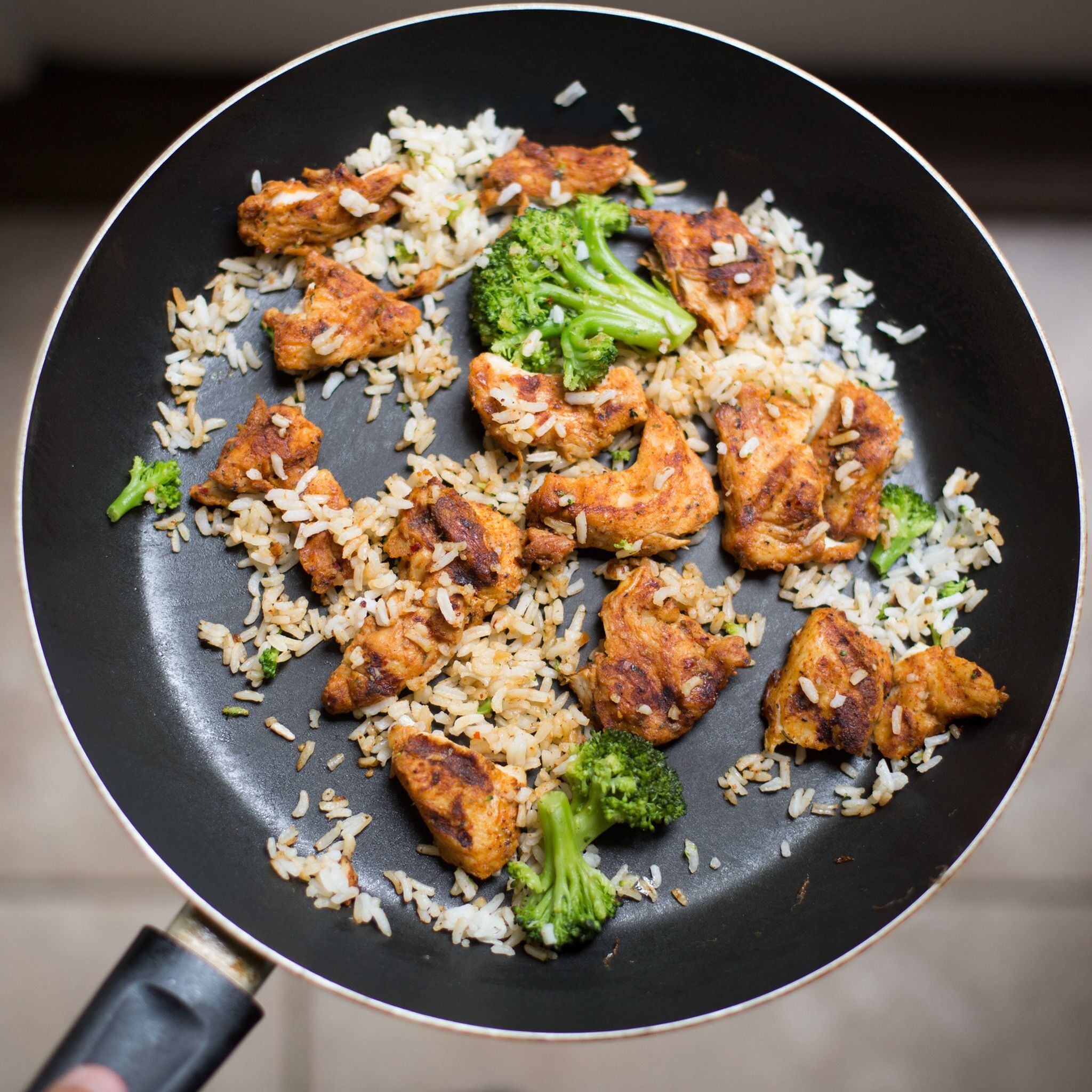
Hot plate cooking is where real dinners happen. One-pot meals fit a single burner perfectly. Brown ground turkey, add canned tomatoes, beans and spices, and you have chili in 25 minutes. For one-pot pasta, add dry pasta, broth and sauce to the same pot and simmer until the liquid is absorbed.
Safety deserves a real mention here. The U.S. Fire Administration found that cooking caused 51% of residential building fires from 2017 to 2019, and unattended equipment was the leading factor in larger cooking fires. Stay in the room while it's on. Keep towels and paper away from the burner. Many leases also have rules about portable cooking appliances, so read yours or check the community FAQs before plugging one in.
What Food That Doesn't Require Cooking Should You Stock?
The best food that doesn't require cooking includes canned tuna and salmon, rotisserie chicken, hummus, cheese, yogurt, nut butters, tortillas, bagged salad kits, fresh fruit and pre-cooked grain pouches. Combine a protein, a fiber source and something crunchy, and you have a full meal with zero heat. These are also the easiest without stove recipes to prep on a Sunday.
Some of our favorite easy dorm meals that work just as well in a studio:
- Chicken Caesar wrap with rotisserie chicken and a bagged salad kit
- Mediterranean plate with hummus, pita, cucumber, olives and feta
- Overnight oats made with milk, chia seeds and frozen berries
- White bean and tuna salad with lemon, olive oil and red onion
No-cook eating also helps your grocery budget, since you buy fewer single-use ingredients. If you're watching spending, our guide to budgeting monthly bills as a first-time renter pairs well with a simple weekly meal plan.
Frequently Asked Questions
1. Can you cook real meals with just a microwave?
Yes. A microwave handles eggs, steamed vegetables, baked potatoes, fish fillets and reheated grains well. Cover and vent the dish, stir halfway, and let food stand three minutes. The main limit is texture, since microwaves don't brown food. Pair microwave cooking with no-cook staples and you can eat well all week.
2. Are hot plates allowed in apartments?
It depends on the property and your lease. Some communities allow hot plates and electric multicookers, while others restrict portable burners for fire safety. Always read your lease or ask the leasing office before buying one. If you do use a hot plate, never leave it running unattended and keep flammable items well away from it.
3. What are easy dorm meals that don't need a stove?
These quick options need little more than a microwave or a fridge:
- Microwave rice bowls with beans, salsa and cheese
- Peanut butter and banana whole-wheat wraps
- Greek yogurt parfaits with granola
- Loaded baked potatoes with broccoli
4. How do I know my microwave meals are safe to eat?
Use a food thermometer instead of guessing. FSIS recommends reheating leftovers to 165°F, and the FoodSafety.gov temperature chart lists 165°F for poultry and 160°F for ground meat. Check the thickest part of the food after the standing time ends, and test in more than one spot.
5. What pantry staples should I keep for kitchenette cooking?
Keep shelf-stable basics that mix into many meals: rice, pasta, oats, canned beans, canned tuna, broth, jarred sauce, peanut butter and spices. In the fridge or freezer, stock eggs, frozen vegetables, tortillas and a protein you like. With these on hand, you can build a meal in about 15 minutes.
Conclusion
A small kitchen changes how you cook, not whether you can. With a microwave, one reliable heat source, a short list of pantry staples and a food thermometer, you can make satisfying meals every day of the week. For renters looking at studio living in Northwest Houston near FM 1960 and Highway 249, that's good news: you can trade a big kitchen for a simpler lifestyle and still eat well. Now you know how to cook real meals without a full kitchen.