
Quick Answer: Managing smells, noise, and air quality in a small space comes down to moving stale air out, filtering what stays, and softening hard surfaces. Run exhaust fans while cooking and showering. Keep humidity between 30% and 50%, size an air purifier to your room, and add rugs, curtains and door seals to cut sound.
A studio fits your kitchen, bed and desk into one room, so last night's salmon and your neighbor's TV both feel a lot closer. Managing smells, noise, and air quality in a small space doesn't take expensive upgrades. It takes a few habits and a couple of smart purchases. Whether you're settling into a studio at Vivo Living Willowbrook in Houston or living anywhere else in the U.S., these steps will make your place feel fresher and calmer.
What Does Good Indoor Air Quality Look Like in Small Space Living?
Good indoor air quality means low levels of particles, gases, odors and excess moisture. It matters more than most renters think. The U.S. Environmental Protection Agency reports that Americans spend about 90% of their time indoors, where some pollutants are often 2 to 5 times higher than typical outdoor levels.
In a compact unit, every source builds up faster. Cooking, cleaning sprays, candles, pets and damp towels all add to the same small volume of air. Fewer square feet means less air to dilute them.
Apartment Ventilation Basics That Do the Heavy Lifting
Ventilation is your first fix, and it costs nothing. The EPA's guidance on cooking and indoor air recommends running your range hood every time you cook and leaving it on for 10 to 20 minutes afterward. Cooking on the back burners when you can helps the hood catch more smoke and grease.
Check whether your hood vents outside or recirculates. A recirculating hood traps grease but pushes the rest of the air straight back into the room. If that's what you have, open a window when the weather allows or pair the hood with a portable air cleaner.
Don't forget the bathroom fan. Run it during every shower and for a while after.
Choosing an Apartment Air Purifier That Fits Your Room
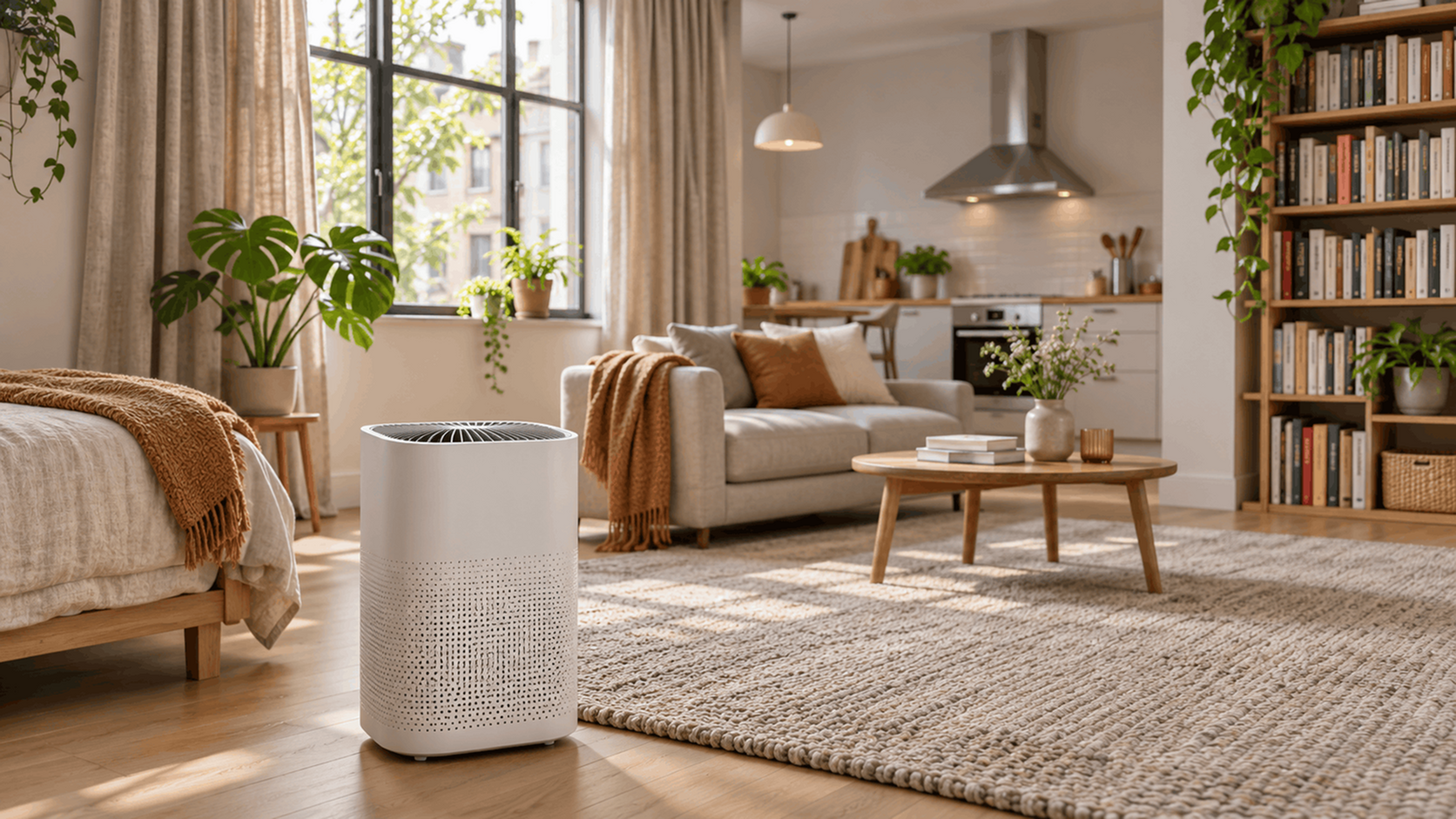
An apartment air purifier works best when it's matched to the room. Look for the Clean Air Delivery Rate, or CADR, on the box. The EPA's Guide to Air Cleaners in the Home explains that a higher CADR means the unit can serve a larger area, and most portable models get there with a HEPA filter. For odors and gases, pick one that also has an activated carbon filter.
There are some limits to keep in mind. The EPA cautions that air cleaners alone can't guarantee clean air when strong pollution sources are present and ventilation is poor, so a purifier works alongside your fans, not instead of them. Skip any unit that intentionally produces ozone. If it'll run all day, an ENERGY STAR certified model saves roughly $18 to $40 a year in electricity depending on size.
How Do You Get Rid of Small Apartment Smells for Good?
Small apartment smells usually come from four places: cooking, trash, pets and moisture. Sprays and scented candles only cover them up while adding more chemicals to the air. What lasts is removing the source, then ventilating or filtering the air that's left. The table below matches common odors with fixes that work.
| Smell Source | Why It Lingers | What to Do |
|---|---|---|
| Cooking (fried food, fish, spices) | Grease and smoke settle on fabrics and walls | Run the range hood during cooking and for 10 to 20 minutes after; clean the hood filter often |
| Trash and recycling | Food waste breaks down quickly in warm rooms | Use a lidded can, take it out daily in summer, rinse containers before recycling |
| Pets | Dander and accidents soak into soft surfaces | Wash pet bedding weekly, vacuum with a HEPA vacuum, scoop litter daily |
| Musty or damp air | High humidity feeds mold and mildew | Keep humidity at 30% to 50%, run bathroom fans, dry wet spots within 48 hours |
| Drains and disposal | Food buildup in pipes | Flush with hot water and baking soda; report odors that keep coming back to maintenance |
| Most odors | A source plus trapped air | Remove the source, then ventilate or filter |
In Houston, humidity is the row to watch. The EPA's mold prevention guidance advises keeping indoor humidity below 60%, ideally between 30% and 50%. An inexpensive humidity meter from a hardware store tells you when to lower the AC setting or run a dehumidifier.
A few more air quality tips that also help with odors:
- Open windows for a few minutes on dry, mild days to swap out stale air.
- Keep an open box of baking soda in the fridge and under the trash bag.
- Switch scented plug-ins for unscented cleaners.
- Wash throw blankets and couch covers monthly, since fabric holds smells longest.
How Can You Reduce Apartment Noise Without Renovating?
You can reduce apartment noise by adding soft surfaces, sealing gaps and using furniture as a buffer. Sound bounces off hard floors and bare walls, and it slips through the gap under your door. Renters can't open walls or add insulation, so the goal is to absorb and block sound with fixes you can remove later.
Start with the floor. A thick rug over a dense pad soaks up footsteps and echo, and it keeps your own noise from reaching the unit below. Heavy curtains do the same job on windows that face a busy road.
Renter-Friendly Soundproofing Apartment Fixes
A full soundproofing apartment project means new drywall and insulation. You don't need any of that. These swaps get you most of the benefit:
- A door sweep or draft stopper on the entry door
- Self-adhesive weatherstripping around the door frame
- A full bookshelf or dresser against a shared wall
- Fabric acoustic panels hung with removable strips
- A white noise machine or fan to mask what still gets through
Check your lease before sticking anything to the walls.
Noise goes both ways, too. Felt pads on chair legs and quieter evenings help you stay on good terms with your neighbors. If your dog is the one making noise, our guide on keeping your dog from barking in the apartment has practical steps. If a noise problem keeps happening, talk to management early, before it turns into a standoff.
Frequently Asked Questions
1. What should I look for in an air purifier for a studio apartment?
Focus on fit and filtration rather than brand. The basics to check on the label:
- A true HEPA filter, not "HEPA-type"
- A CADR rated for your room's square footage
- An activated carbon filter for odors
- No ozone generation
- A low noise rating if it sits near your bed
2. How often should I air out my apartment?
Open windows for 5 to 10 minutes on days when it's cool and dry outside. In humid months, rely on exhaust fans and your AC instead, since warm, damp outdoor air can raise indoor humidity. Always ventilate right after cooking, cleaning with strong products or painting.
3. Why does my apartment smell musty even when it's clean?
Musty smells almost always point to moisture. Damp towels, a bathroom without a running fan, or humidity above 60% let mildew grow in hidden spots. Check humidity with a meter, run fans longer and report any leaks or water stains to maintenance right away.
4. Can I soundproof an apartment without damaging the walls?
Yes. Rugs with dense pads, heavy curtains, door sweeps and weatherstripping all install without tools or holes. Placing a full bookshelf against a shared wall adds mass that blocks sound. Fabric panels hung with removable strips cut echo and come off cleanly when you move out.
5. What are the easiest air quality tips for small space living?
Run the range hood and bathroom fan every time you use them, and keep humidity between 30% and 50%. Take trash out often and swap scented sprays for unscented cleaners. If you add one device, make it a right-sized HEPA air purifier with a carbon filter.
Conclusion
Managing smells, noise, and air quality in a small space comes down to small, steady habits. Ventilate while you cook and shower, keep an eye on humidity, filter the air with a purifier sized to your room and soften hard surfaces to cut noise. Layout helps too, so if you're still choosing a home in Houston, compare our studio floor plans and look at where the kitchen sits in relation to the bed. A few easy changes and your studio will smell fresher and feel quieter.