
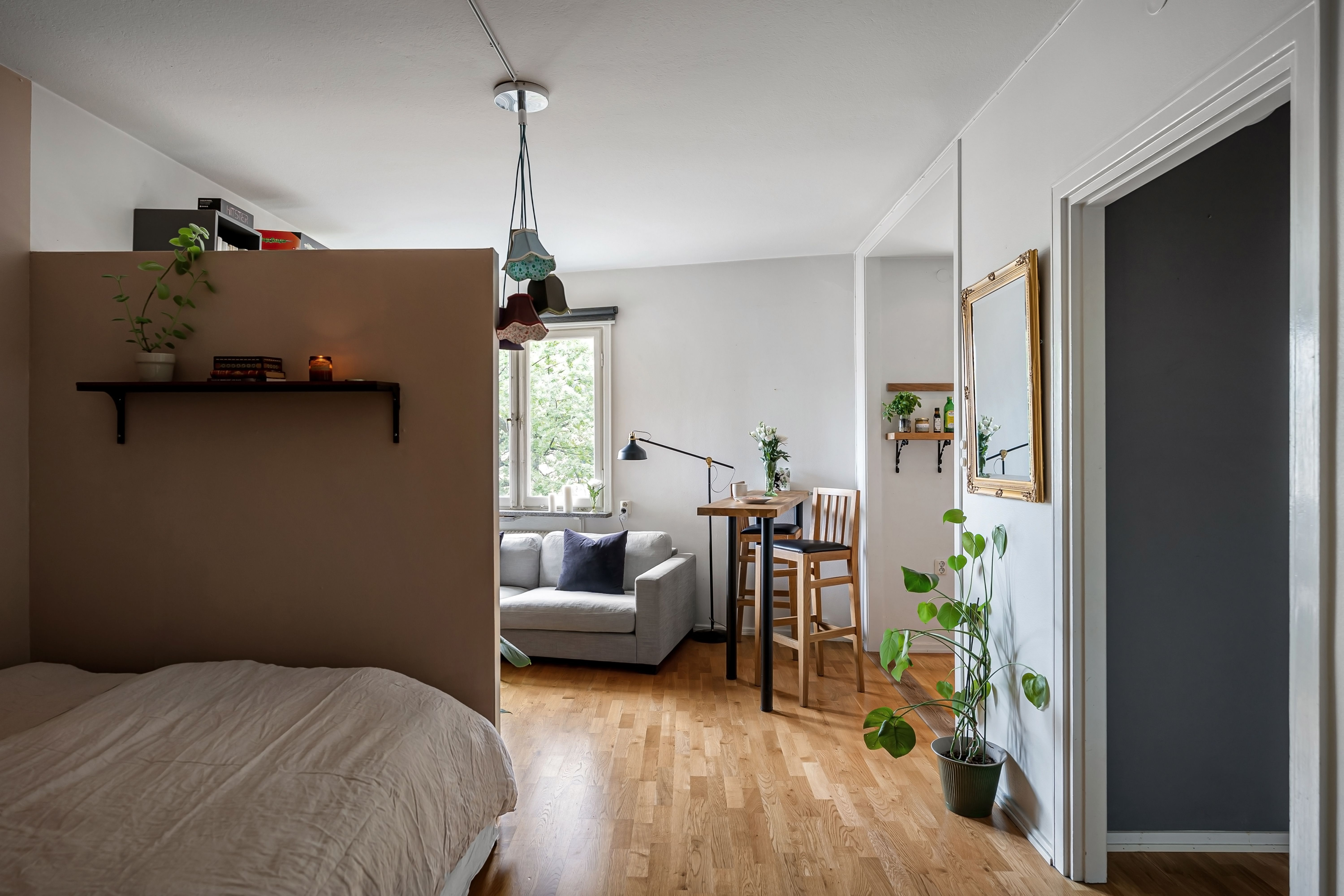
Quick Answer: In the micro studio vs. studio vs. efficiency apartment comparison, size and kitchen setup do the separating. Micro studios run under 350 square feet with built-in furniture. Studios are the largest of the three, usually 400 to 600 square feet with full appliances. An efficiency sits between them and often swaps the full kitchen for a kitchenette.
Three listings, three labels, and no rule about which is which. Renters run into micro studio vs. studio vs. efficiency apartment postings constantly, and leasing agents use the terms to mean different things. The federal government has one definition, developers have another, and the listing you are reading probably follows neither. Pull up the studio apartment floor plans for any building you are considering and the differences get concrete fast. Here is what actually separates the three.
What to look for in apartment floor plans before you tour
Square footage is the headline number, but it is not the one that decides whether a small unit works. Check three things on any plan: total size, whether the kitchen has full-size appliances or a two-burner kitchenette, and whether the sleeping area sits open to the living space or tucked into an alcove. Those three answers tell you more than the label does.
Micro units are built small on purpose
Micro units are the newest category and the most deliberate. Industry definitions cluster at 350 square feet or less, with a working kitchen and a private bathroom inside that footprint. Several cities have approved units well under 300 square feet. The design is the point: Murphy beds, fold-down tables, cabinetry built into the walls instead of furniture you squeeze in later. A micro unit is not a shrunken studio. It was drawn that size from the start.
Efficiency apartment layout: check the kitchen first
An efficiency apartment layout is usually one room plus a bathroom, with a kitchenette standing in for a full kitchen. Expect a two-burner cooktop, a compact refrigerator, and a microwave doing the work of an oven. Sizes run roughly 300 to 500 square feet depending on the market. Older buildings sometimes wall the kitchen area partly off from the sleeping space, which is the one structural quirk that separates a true efficiency from a plain studio.
Studios give you room to rearrange
Studios are the loosest of the three categories. Most run 400 to 600 square feet, and there is no upper limit: a high-end studio can clear 700. The extra space buys a full-size range, a real refrigerator, and enough floor to put a bookcase between the bed and the couch. Some add an alcove or loft that gives the bed its own corner.
Average cost of efficiency apartment rentals in 2026
What it costs to rent efficiency units depends on the metro far more than on the label. HUD publishes a zero-bedroom fair market rent for every metro area and county in the country, and the FY2026 schedule runs from $607 in Boone County, Arkansas to $2,407 in the Jersey City metro. Same unit type, four times the price.
Two patterns matter more than the average. A cheap efficiency in a mid-size metro usually undercuts a studio in the same building, since the smaller footprint and the kitchenette cost the owner less to build and maintain. Rent per square foot moves the opposite direction. Divide monthly rent by size and small units look expensive on paper. That is the trade: you pay less in total and more per foot.
| Feature | Micro studio | Studio | Efficiency apartment |
|---|---|---|---|
| Typical size | 150 to 350 sq ft | 400 to 600 sq ft | 300 to 500 sq ft |
| Kitchen | Compact appliances, built in | Full-size range and fridge | Kitchenette, two burners |
| Sleeping area | Murphy or fold-away bed | Open, sometimes an alcove | Open, occasionally partitioned |
| Official status | Market term, no legal definition | Counted as zero-bedroom | HUD and Census term for zero-bedroom |
| Monthly rent | Lowest of the three | Highest of the three | Below a comparable studio |
| Best fit | Trading space for location | Renters who cook and host | Chasing the lowest total bill |
One caveat. Published size ranges vary by source and by region, and a Boston building will call something a studio that a Dallas building would call a micro unit.
Does the apartment building layout change how a small unit feels?
Yes, more than most renters expect. A 300 square foot unit at the end of a double-loaded corridor with one small window feels nothing like a 300 square foot corner unit with windows on two walls. The apartment building layout sets your natural light, your noise exposure, and whether your front door opens onto an elevator lobby.
Shared space does the same work. Buildings that lean into small units usually compensate with square footage you do not pay to heat, which is why an on-site fitness center and co-working lounge shows up so often in these communities. That is the bargain behind a small-unit apartment complex layout. Your unit is compact because the building gives you somewhere else to go.
Apt layouts that make a small footprint work
Two units of identical size can live completely differently. A rectangle beats an L-shape because you can zone it. A galley kitchen along one wall frees the opposite wall for a bed. Closet placement matters more than closet size. Ask for the dimensioned plan rather than the square footage alone, then measure your bed against the wall you intend to put it on.
Real numbers help here. Studios at Vivo Living Willowbrook in northwest Houston run 228 to 294 square feet and were listed from roughly $689 a month as of July 2026, with utilities and internet folded into the rent. By size those units sit firmly in micro territory. By listing, lease, and label, they are studios. That gap is exactly why the term on the ad tells you so little.
Frequently Asked Questions
1. Is an efficiency apartment the same as a studio?
In federal data, yes. HUD and the Census Bureau both use efficiency as the official name for a zero-bedroom unit, so government statistics treat them as one category. In rental listings the words drift apart: efficiency tends to signal a smaller unit with a kitchenette, studio implies more room and full appliances.
2. How small is a micro studio apartment?
Most land between 150 and 350 square feet, with 250 to 300 common in newer construction. No national minimum applies. Local building and zoning codes set the floor, and those limits vary sharply from one city to the next, which is why a micro unit in Seattle and one in Houston can differ by 100 square feet.
3. What should you check before you rent an efficiency?
Four questions settle it faster than a walkthrough:
- Full-size appliances, or a two-burner kitchenette?
- Is there a dimensioned floor plan, not just a total square footage?
- Which utilities and what internet does the rent already cover?
- Is storage built into the unit, or do you supply it?
4. Are micro units cheaper than studios?
Lower monthly rent, higher rent per square foot. A micro unit in the same building almost always costs less each month than the studio down the hall, but you pay more for every foot you get. Whether that trade makes sense depends on how much the location is worth to you.
5. Do efficiency apartments have a private bathroom?
Nearly always, and it is usually the only enclosed room in the unit. A small number of older single-room-occupancy buildings still share bathrooms down the hall. HUD prices those separately, setting single-room-occupancy rents at 75 percent of the local zero-bedroom rate, which is a useful signal of the difference.
The bottom line
Micro studio vs. studio vs. efficiency apartment comes down to three checks, and the word in the listing title is not one of them. Check the square footage, check whether the kitchen has full-size appliances, and check how the building spends the space it left out of your unit. Then run the total monthly cost, not the base rent. A 250 square foot unit with the bills included can beat a 450 square foot one that bills separately, worth remembering when you compare current studio listings against anything larger. The label will not tell you that. The floor plan will.