
Quick answer
A micro studio apartment is a self-contained, single-room home that combines the sleeping, living, and kitchen areas into one open space with a private bathroom. Most measure 150 to 400 square feet, well under the 500 to 600 square foot average studio size, which makes them one of the most affordable ways to rent a private place of your own.
Renters across the country are trading square footage for location, lower rent, and simpler living, and the micro studio apartment sits right at the center of that shift. If you have scrolled through listings and spotted a unit under 400 square feet with a price that seems almost too good to be true, you have likely found one.
So what is a micro studio apartment, and is it the right fit for your budget and lifestyle? This guide breaks down what these compact homes actually are, how large they tend to be, how they compare to standard studios and efficiency units, and the kind of renter who genuinely thrives in one.
What Is a Micro Studio Apartment?
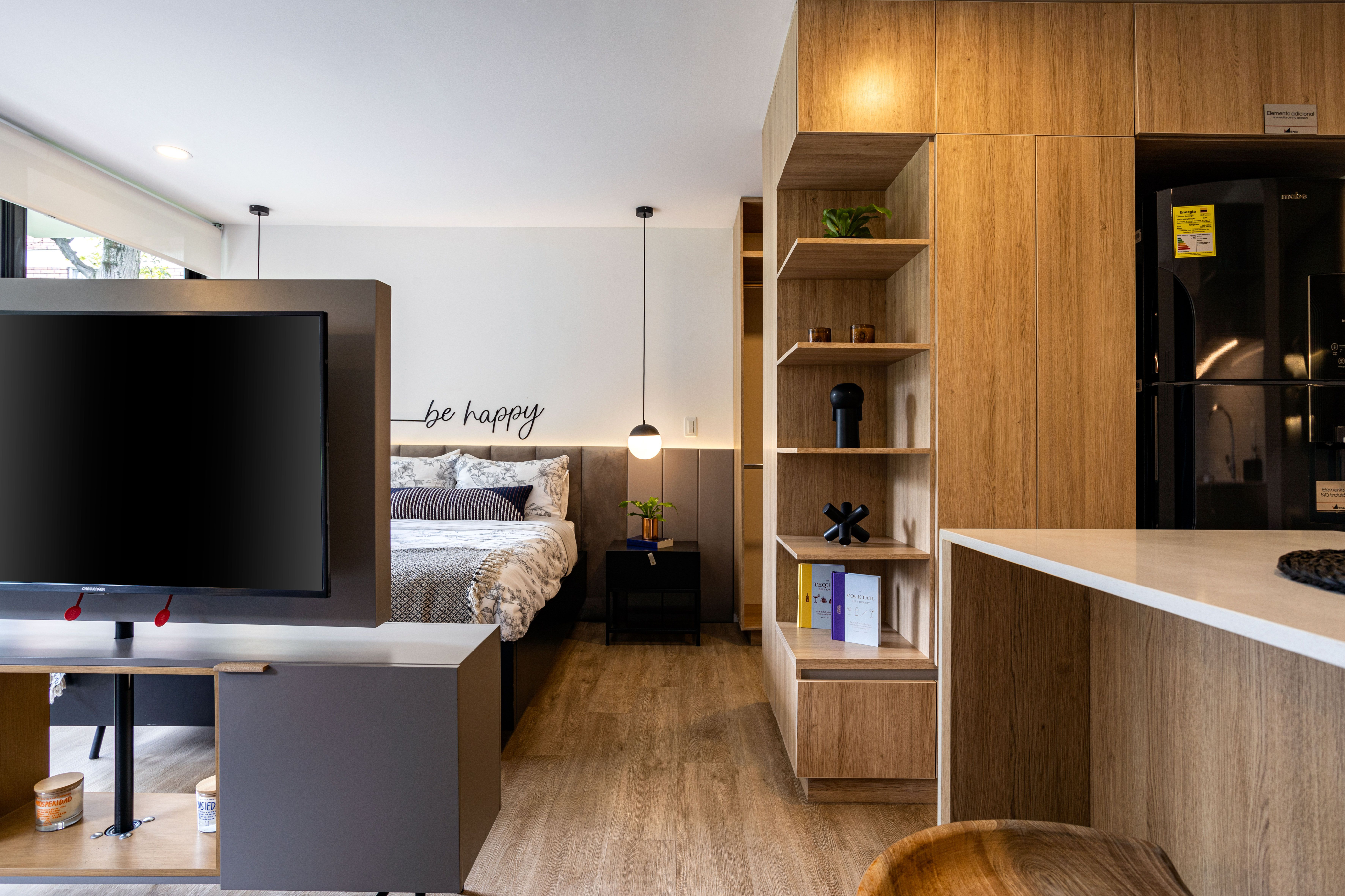
A micro studio apartment is a self-contained, single-room living space that combines your sleeping, living, and kitchen areas into one open floor plan, paired with a separate private bathroom. It is essentially a smaller version of a traditional studio, and you will sometimes see it shortened to micro apt in rental listings. The defining feature is size rather than layout: while a standard studio can stretch past 600 square feet, a micro unit is deliberately compact.
There is no single legal definition of a micro unit in the United States. The Urban Land Institute uses a working description of a small studio, typically under 350 square feet, with a fully functioning kitchen and bathroom. Many cities have since written their own rules, which is why the exact cutoff shifts from one market to the next.
How Big Is a Micro Studio? Sizes and the Average Studio Size
Most micro studios fall somewhere between 150 and 400 square feet, with the majority clustering in the 200 to 350 square foot range. To put that in perspective, the average studio size in the U.S. runs roughly 500 to 600 square feet, so a micro unit can be less than half the footprint of a conventional studio.
Real-world examples make this concrete. At Vivo Living Willowbrook in northwest Houston, the studio floor plans run from about 228 to 294 square feet, which places all of them firmly in micro territory, and you can browse the available floor plans to see how designers fit a full kitchen, bathroom, and combined living-sleeping zone into that space. In dense, high-cost cities like New York, San Francisco, and Seattle, an emerging class of micro studios dips under 300 square feet, and some local codes set minimum unit sizes around 220 square feet.
Micro Studios vs. Efficiency Units vs. Standard Studios
These three terms often get used interchangeably, but they are not identical. A standard studio is the largest of the group and simply means one open room plus a bathroom. Efficiency units tend to be the most stripped-down, typically featuring a smaller kitchenette or compact appliances instead of full-size ones. Micro studios sit at the smallest end of the spectrum, purpose-built to squeeze value out of every inch.
| Unit Type | Typical Size | Layout & Kitchen | Best For |
|---|---|---|---|
| Efficiency unit | 200 to 450 sq ft | Compact kitchenette or smaller appliances | Renters chasing the lowest possible rent |
| Micro studio | 150 to 400 sq ft | One open room, full or space-saving kitchen, separate bath | Solo renters prioritizing location and price |
| Standard studio | 500 to 600 sq ft | One open room, full kitchen, separate bath | Renters who want more breathing room |
| Vivo Living Willowbrook (Houston, TX) | 228 to 294 sq ft | All-bills-paid studio, full bath, open layout | Renters wanting utilities included and simple budgeting |
Because a micro studio and a standard studio share the same basic one-room structure, the biggest practical difference you will feel day to day is how much floor space you have for furniture and storage.
Common Micro Apartment Floor Plans and Layouts
Good micro apartment floor plans are all about smart use of vertical and hidden space. Common design moves include Murphy beds that fold into the wall, lofted sleeping areas, recessed nooks for dining, and built-in storage tucked under seating or stairs. Many buildings also lean on communal areas to make up for smaller units, offering shared amenities such as a co-working lounge and fitness center so residents are not confined to their four walls.
You will typically run into a few layout styles. A straight or square plan puts everything in one rectangular room. An alcove or L-shaped plan carves out a small recessed nook that can hold a bed, giving a bit of visual separation. Whichever style you choose, measuring your furniture before move-in is essential, since a few inches can decide whether a couch actually fits.
The Pros and Cons of Micro Living
The appeal of micro living usually comes down to money and location. Because you are renting less space, the rent is lower, which can put you in a walkable neighborhood or near a job you could not otherwise afford. Smaller spaces also mean lower utility costs, less cleaning, and a natural nudge toward a clutter-free, minimalist routine.
The trade-offs are just as real. Storage is limited, hosting guests is harder, and working from home in a single room takes discipline. Careful budgeting for monthly bills and an honest look at your daily habits will tell you whether the savings outweigh the tighter quarters. For renters who are rarely home and value experiences over possessions, the math often works out in their favor.
Who Should Consider Micro Units?
Micro units suit some lifestyles far better than others. They are popular with students, early-career professionals, traveling nurses and healthcare workers, and anyone relocating to a new city who wants an affordable landing spot. Solo renters who spend most of their time out and about, rather than entertaining at home, tend to be the happiest in a micro studio apartment.
They are a tougher fit for couples, anyone who works from home full time and needs a dedicated office, or renters carrying a lot of belongings. If you fall somewhere in between, spending a few nights in a small space before signing a lease can be a helpful reality check.
Are Micro Apartments Worth the Trade-Off?
For the right person, micro apartments deliver a hard-to-beat combination of location and affordability. All-bills-paid communities sweeten the deal further by folding electricity, water, and other utilities into one predictable payment, which removes the guesswork from monthly budgeting. At Vivo Living Willowbrook, for example, all-bills-paid studio options start in the high $600s per month, which is difficult to match for a private space of your own in the Houston area.
The bottom line is that a micro studio is not about sacrificing quality of life. It is about deciding what you actually need from a home. If location, low cost, and simplicity rank higher than raw square footage, a micro studio apartment can be a smart, modern choice.
Frequently Asked Questions
1. What is the difference between a micro studio and a regular studio?
Both are single-room apartments with a private bathroom. The difference is size: a micro studio is usually under 400 square feet, while a regular studio averages closer to 500 to 600 square feet.
2. Are micro studio apartments cheaper than one-bedrooms?
Yes. Because they offer far less square footage, micro studios almost always rent for less than one-bedroom apartments in the same area, and often for less than standard studios too.
3. Can two people live in a micro studio apartment?
It is possible but tight. With 150 to 400 square feet and a single open room, most micro studios are best suited to one occupant, though some couples make it work with careful furniture choices and strong organization.
4. How much does a micro studio apartment cost?
Costs vary widely by city, but because micro studios offer the least square footage, they typically rent for less than standard studios and one-bedroom apartments nearby. All-bills-paid communities add value by bundling utilities into a single payment, and at Vivo Living Willowbrook in Houston, studios start in the high $600s per month.
5. How do you make a micro studio feel bigger?
Lean on multi-functional furniture like a Murphy bed or a storage ottoman, use vertical shelving to keep the floor clear, and add mirrors and light finishes to bounce natural light around the room. Keeping clutter to a minimum does more for the sense of space than almost anything else.